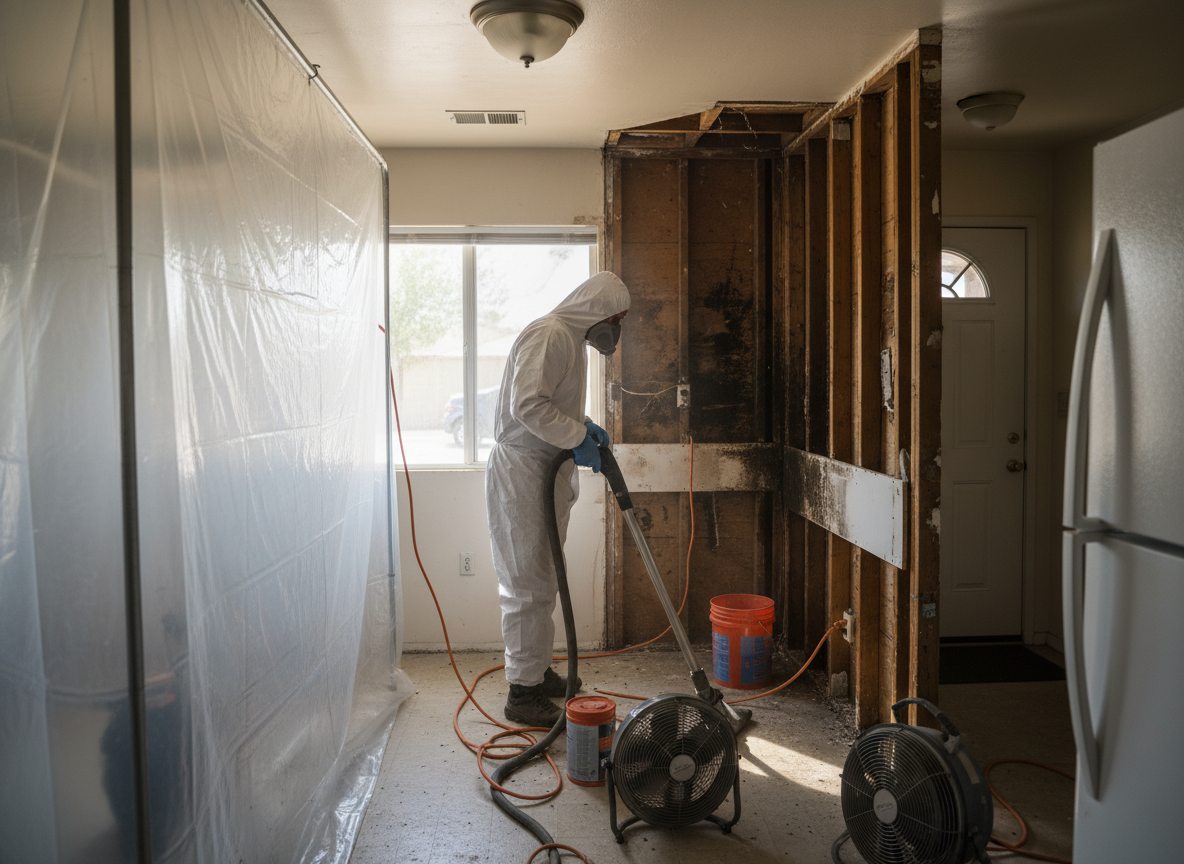
North Palm Springs sits in Riverside County where hot desert summers push air conditioning systems hard. Condensation lines and drip pans in homes along N Indian Avenue and nearby streets often develop small leaks that go unnoticed until black mold appears on drywall or in attics. Older single-story ranch houses common here have limited attic ventilation, so even a minor moisture source can spread spores quickly once temperatures drop into the mild winter range. Keeping remediation affordable means catching growth before it requires full wall removal.
We use localized containment with plastic sheeting and negative air machines sized for the small square footage typical in these desert homes rather than whole-house setups. Moisture meters check behind stucco and in crawl spaces where irrigation runoff from yards near Desert Hot Springs can seep under slabs. Removing affected drywall in sections and applying EPA-registered antimicrobials keeps material costs down while meeting Riverside County health guidelines for residential properties.
Homeowners sometimes attempt bleach cleaning on visible spots, but that leaves roots in porous wood framing common in 1970s builds around North Palm Springs. Proper removal includes HEPA vacuuming of all surfaces and disposal of contaminated insulation in sealed bags to prevent cross-contamination during transport through the dry, windy conditions here.
Desert Climate Considerations
Hot summers increase AC runtime and therefore condensation risk while mild winters allow slow leaks to persist undetected. Checking irrigation lines and roof flashings around chimneys before monsoon season helps limit repeat calls.
Technician insight
In North Palm Springs the thing that catches most people out with affordable mold remediation is how irrigation runoff from yards along N Indian Ave pools against slab edges in these older ranch homes, feeding hidden growth that only shows up after the AC runs hard through summer.
Attic Mold from AC Drip in North Palm Springs
A homeowner noticed musty smell in the hallway of a 1970s home near Desert Hot Springs. Inspection found a clogged condensate line dripping into insulation above the master bedroom. We isolated the attic section, removed wet insulation and ceiling drywall, treated framing, and restored airflow. The family stayed in the house during the two-day process.
How it works
- 1
Initial Inspection
Technician arrives within hours, uses moisture meters and borescopes to map hidden growth in attics and walls without unnecessary demolition.
- 2
Containment Setup
Plastic barriers and negative air establish controlled zones sized to the actual affected area to control costs.
- 3
Removal and Treatment
Affected materials are cut out, surfaces cleaned with approved antimicrobials, and HEPA vacuumed before drying equipment is placed.
- 4
Clearance and Prevention
Final moisture readings confirm dryness; recommendations for AC maintenance and ventilation improvements are provided.
Pricing
Upfront quotes after inspection; price driven by square footage affected and access difficulty in older desert construction.