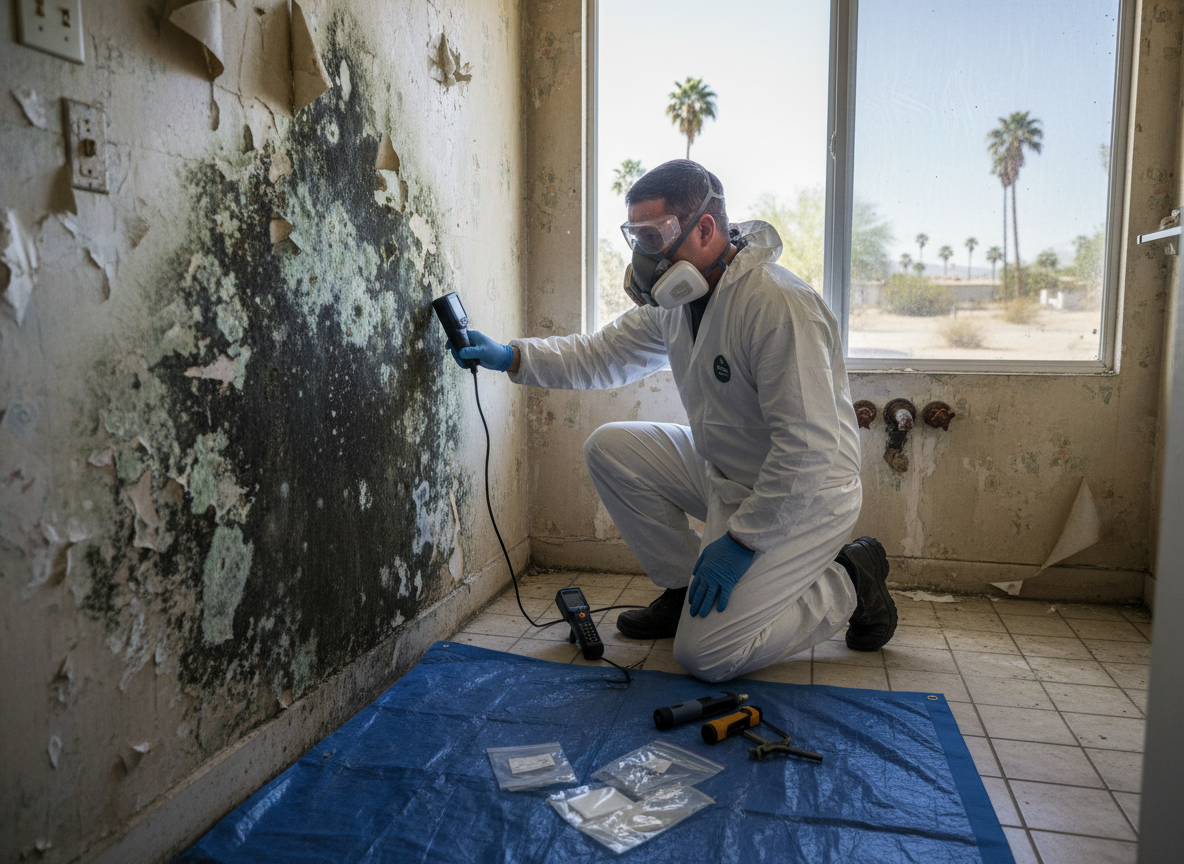
Mold inspection in North Palm Springs must account for the hot desert climate where rapid temperature swings between scorching days and cooler nights drive condensation inside poorly insulated stucco homes and older ranch-style houses common along N Indian Ave and nearby streets. Inspectors focus on attic spaces, HVAC ducts, and crawl spaces where moisture from evaporative coolers or monsoon rains collects against wood framing and drywall. Thermal imaging and moisture meters reveal hidden pockets behind walls that visual checks miss, especially in properties built before modern vapor barriers became standard in Riverside County.
Edge cases frequently arise around Desert Hot Springs and Palm Springs borders where alkaline soil and occasional flash flooding push water under slab foundations. In these situations inspectors test for elevated humidity levels in subfloor areas and behind baseboards that can trigger Aspergillus or Stachybotrys growth without obvious water stains. Air sampling and surface swabs are collected methodically to map spore counts room by room, providing data that guides targeted remediation rather than whole-house treatments.
Code requirements in Riverside County emphasize proper documentation of moisture sources before any removal work starts. Inspectors note ventilation deficiencies common in mid-century homes that trap humidity from showers and cooking, creating recurring mold cycles. Homeowners receive written findings that distinguish between active growth and settled spores, helping avoid unnecessary demolition while flagging real risks in bathrooms, laundry rooms, and under kitchen sinks.
Seasonal patterns matter here. Mild winters reduce obvious leaks yet allow slow moisture buildup in wall cavities, while summer AC overuse creates cold surfaces that collect condensation. Inspections timed after monsoon season catch the highest risk periods when roof penetrations around swamp coolers fail.
Technician insight
In North Palm Springs, the thing that catches most people out with Mold Inspection is how often evaporative cooler leaks or AC condensate lines drip into wall cavities during the long hot summers without ever showing exterior stains. The mild winters let that moisture sit and grow behind stucco until a monsoon finally pushes it through.
Attic Growth Found After Cooler Failure
A North Palm Springs homeowner noticed musty odors near the master bedroom after an unusually wet monsoon season. Inspection revealed a leaking evaporative cooler had saturated attic insulation above the ceiling. Samples confirmed Penicillium growth in the cellulose. The report mapped the affected area so remediation could remove only the wet material without disturbing the rest of the home.
How it works
- 1
Initial Assessment
Review property history and visible moisture concerns at the North Palm Springs address.
- 2
Visual and Tool Inspection
Use moisture meters, thermal cameras, and borescopes to examine attics, walls, and HVAC systems.
- 3
Sampling
Collect air and surface samples from affected zones for lab analysis.
- 4
Reporting
Deliver detailed findings with photos, spore counts, and recommended next steps.
Pricing
Inspection cost depends on square footage, number of samples, and access challenges typical of desert construction.