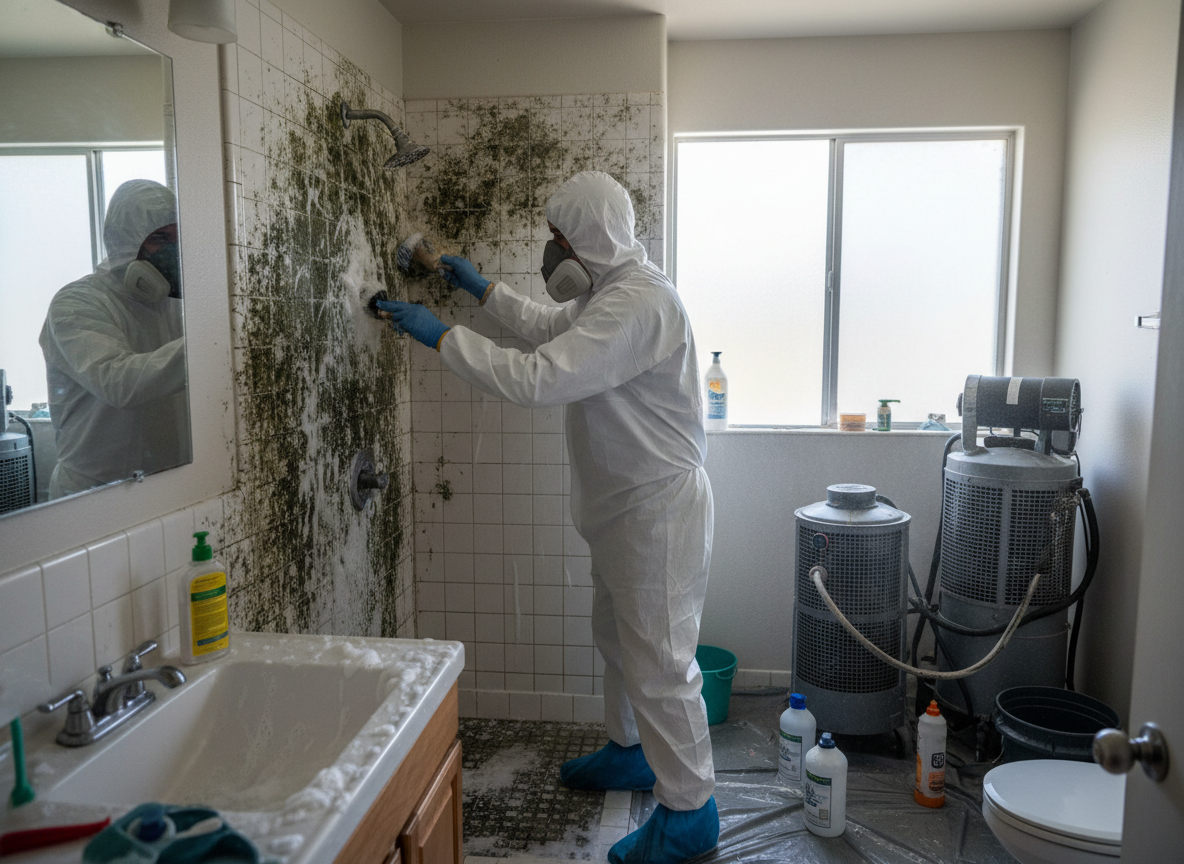
Bathroom mold in North Palm Springs often starts behind tile or in ceiling corners where shower steam meets the cool air from rooftop AC units. Older single-story homes common along N Indian Ave and nearby streets in Riverside County frequently lack adequate exhaust fans, allowing moisture to linger after daily use. Hot summer temperatures above 100 degrees drive residents to run air conditioning longer, creating condensation on pipes and walls that feeds mold colonies out of sight. Proper removal requires isolating the space, HEPA vacuuming affected drywall or grout, and treating subflooring that can retain hidden water from past leaks common in Desert Hot Springs-adjacent properties.
Removal work here must account for the mild winters that keep humidity levels from dropping fully, allowing spores to remain active year-round. Technicians cut away saturated drywall sections around tubs and vanities, then apply antimicrobial solutions to studs before drying with commercial air movers. In North Palm Springs homes with stucco exteriors, exterior wall cavities behind bathrooms can pull in additional moisture during rare monsoon rains, requiring inspection of weep holes and flashing. Homeowners often discover the issue only after odors spread into adjacent bedrooms, at which point surface cleaning alone fails to stop recurrence.
Final steps include replacing removed materials with moisture-resistant board and sealing joints to handle the extreme temperature swings between day and night. Local properties near Palm Springs city limits sometimes have original 1970s plumbing that sweats more during peak summer loads, increasing risk along shared walls in duplexes. Post-remediation, clearance testing confirms spore counts match outdoor baselines before the bathroom returns to use. This process prevents cross-contamination to other rooms during the hot months when windows stay closed.
Technician insight
In North Palm Springs the thing that catches most people out with bathroom mold removal service is assuming the dry desert air will handle excess shower moisture on its own. Rooftop AC condensation lines often drip into ceiling cavities of the 1960s and 70s homes along Indian Avenue, feeding mold that never dries out during mild winters. Skipping a full cavity inspection behind the tub usually means the job has to be redone within a year.
Hidden Mold Above Shower in North Palm Springs Duplex
A homeowner noticed a musty smell spreading from the bathroom into the hallway during summer. Inspection revealed saturated drywall above the shower where AC condensate had pooled inside the ceiling. We contained the room, removed the affected section, treated the joists, and installed new moisture-resistant board with proper sealing. Odors cleared and the bathroom passed air testing within three days.
How it works
- 1
Initial Assessment
Technician inspects all bathroom surfaces, checks for hidden moisture behind tile and in ceilings using meters, and identifies moisture sources tied to local AC and shower use.
- 2
Containment Setup
Plastic barriers and negative air machines isolate the bathroom to prevent spores from moving into living areas common in North Palm Springs single-story homes.
- 3
Material Removal
Cut out and dispose of affected drywall, grout, or baseboards while treating exposed framing with EPA-registered antimicrobials suited to desert conditions.
- 4
Drying and Restoration
Deploy air movers and dehumidifiers until moisture readings normalize, then replace materials with mold-resistant options before final clearance testing.
Pricing
Pricing depends on the square footage affected, depth of hidden growth, and any needed material replacement; inspection provides an exact quote.