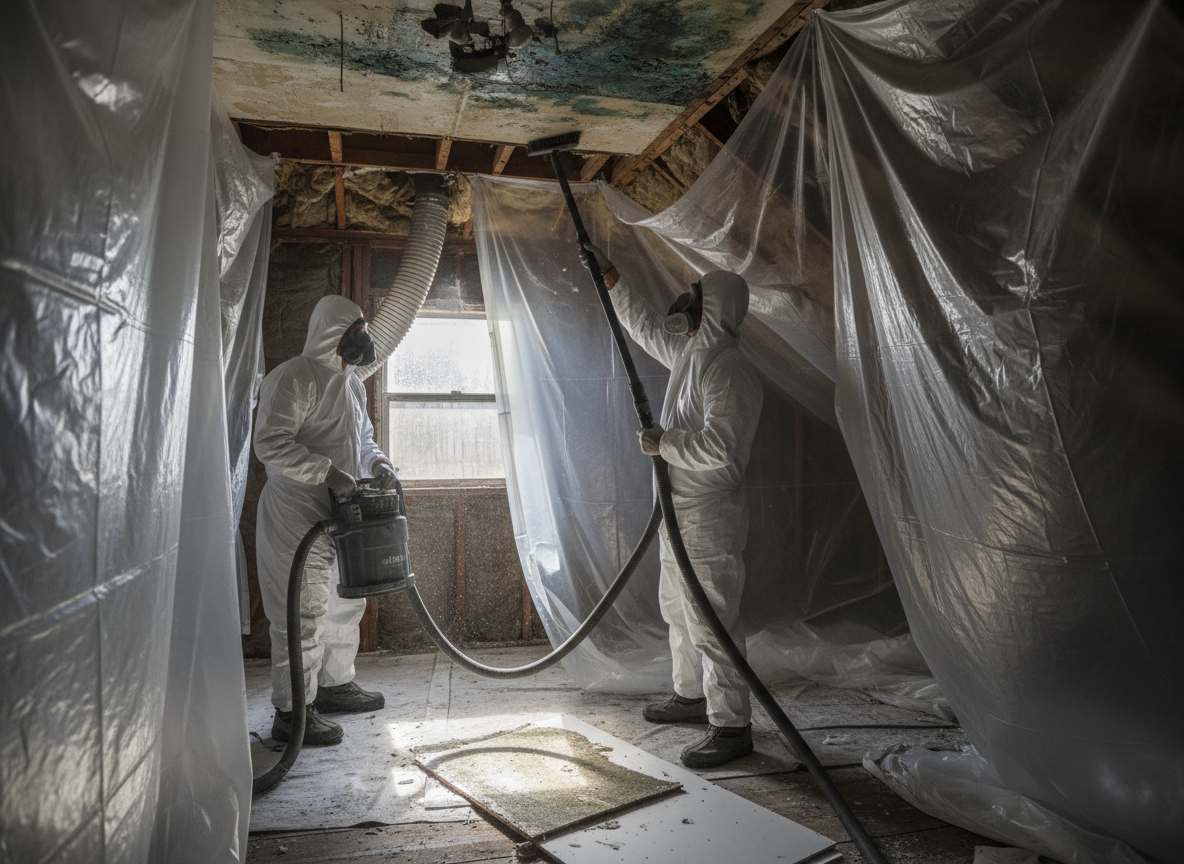
Mold remediation in North Palm Springs starts with identifying moisture sources common in the hot desert climate, where air conditioning condensation in attics and wall cavities often feeds hidden growth. Older housing stock near Indian Avenue and along the edges of Palm Springs frequently features stucco exteriors over wood framing that traps humidity after rare but intense summer storms. Technicians inspect HVAC systems and irrigation lines first because these are the primary entry points for water that leads to recurring colonies in crawl spaces. Proper containment using negative air pressure prevents spores from spreading through the dry, windy conditions typical of the area.
Removal methods focus on affected drywall, insulation, and baseboards while preserving the structural integrity of homes built decades ago in North Palm Springs. In Riverside County, local building practices mean many properties have limited ventilation, so dehumidification equipment runs longer to reach safe moisture levels before any new materials are installed. Technicians avoid bleach on porous surfaces because it fails to address roots embedded in gypsum board, opting instead for EPA-registered antimicrobials followed by HEPA vacuuming. Homeowners are advised against DIY attempts during mild winter months when indoor humidity can still spike from evaporative coolers left running.
Post-remediation verification includes air sampling and visual checks to confirm clearance, especially important near Desert Hot Springs where mineral-rich well water can leave behind residues that mask ongoing leaks. Documentation of the work supports insurance claims common in this region for water damage from aging plumbing. The process accounts for the terrain's sandy soils that allow rapid drainage yet create hidden pockets of moisture under slabs. Final steps include advising on ventilation upgrades suited to extreme summer heat to reduce future risk.
Technician insight
In North Palm Springs, the thing that catches most people out with mold cleanup near me is AC condensation dripping into wall cavities during the long hot summers; older homes along N Indian Ave often have poorly sealed ducts that let moisture travel far beyond the obvious stain, so we always pull baseboards two rooms away from the visible spot.
Hidden Attic Mold from AC Leak
A North Palm Springs homeowner noticed musty odors near the hallway after a mild winter. Inspection revealed condensation from an aging rooftop unit had soaked insulation above the master bedroom. We contained the attic, removed saturated materials, treated the joists, and ran dehumidifiers for 48 hours. Clearance testing passed and the system was resealed to handle the coming summer heat.
How it works
- 1
Initial Assessment
Technicians arrive within hours and use moisture meters plus thermal imaging to locate all affected zones in the North Palm Springs property.
- 2
Containment Setup
Plastic barriers and negative air machines isolate the work area to stop spores from migrating through the dry desert air.
- 3
Removal and Cleaning
Damaged materials are removed, surfaces treated, and HVAC components cleaned to address condensation common in local homes.
- 4
Drying and Verification
Industrial dehumidifiers run until levels stabilize, followed by testing to confirm the space meets clearance standards.
Pricing
Upfront quotes provided after inspection; cost varies with square footage and hidden damage extent.