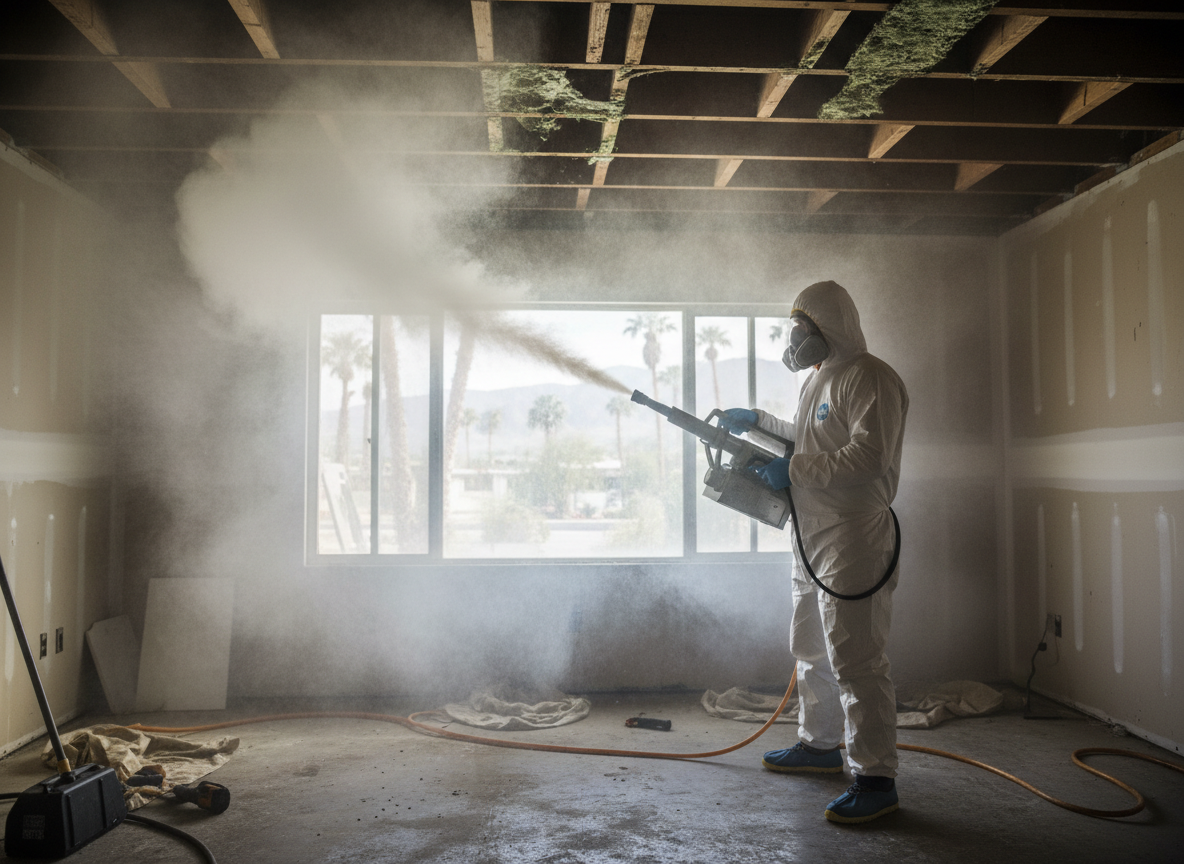
Mold fogging treatment disperses EPA-registered antimicrobial fog into attics, wall cavities, and HVAC systems common in North Palm Springs homes built from the 1960s onward. The process addresses the fine desert dust that mixes with moisture from evaporative coolers and occasional monsoon leaks, allowing spores to travel through older ductwork and settle behind stucco or drywall. Technicians from our base at 19997 N Indian Ave calibrate particle size to penetrate without leaving residue on tile or wood floors typical in Riverside County residences. Post-fogging ventilation prevents re-condensation during the area's mild winter nights when indoor humidity can spike.
In hot summer months when temperatures exceed 110 degrees, air conditioning runs continuously and creates cold spots where condensation forms inside walls near Desert Hot Springs borders. Fogging reaches these pockets without demolition when combined with targeted moisture mapping. Homeowners often overlook crawl spaces under single-story homes along N Indian Ave where alkaline soil retains trace water from irrigation, feeding hidden colonies that fog alone can suppress. Follow-up air sampling confirms spore reduction before any surface cleaning begins.
Fogging works best after fixing the moisture source, such as a cracked slab or poorly sealed window common in Palm Springs tract homes. The treatment does not replace removal of visible growth on porous materials like carpet padding or insulation. Our 24/7 response allows same-day treatment when residents notice musty odors after rare heavy rains that pool against north-facing foundations in North Palm Springs.
Technician insight
In North Palm Springs, the thing that catches most people out with mold fogging treatment is evaporative cooler residue that keeps cellulose insulation damp long after the monsoon season ends. Homes along N Indian Ave often have single-wall construction that lets fog reach cavities easily but also lets alkaline dust neutralize some antimicrobials faster than in Palm Springs proper, so we always run a second pass on those builds.
Hidden growth in 1970s tract home
A resident near 19997 N Indian Ave noticed a musty smell after running the swamp cooler through July. Inspection found condensation inside the attic duct chase where desert dust had accumulated. We contained the space, performed fogging on the ducts and insulation, then ventilated overnight. Follow-up sampling showed spore counts returned to outdoor baseline levels.
How it works
- 1
Initial Assessment
Technicians inspect attics, HVAC returns, and wall cavities for moisture and visible growth using meters and borescopes suited to desert construction.
- 2
Containment Setup
Plastic barriers and negative air machines isolate treated zones to prevent spore migration into living spaces during fog application.
- 3
Antimicrobial Fogging
ULV foggers disperse solution throughout the structure, reaching ducts and cavities without wetting surfaces in older North Palm Springs homes.
- 4
Ventilation and Clearance
Air movers clear fog residues, followed by optional post-treatment sampling to verify spore levels before reoccupancy.
Pricing
Pricing varies by square footage, number of HVAC zones, and whether visible growth requires separate removal before fogging.