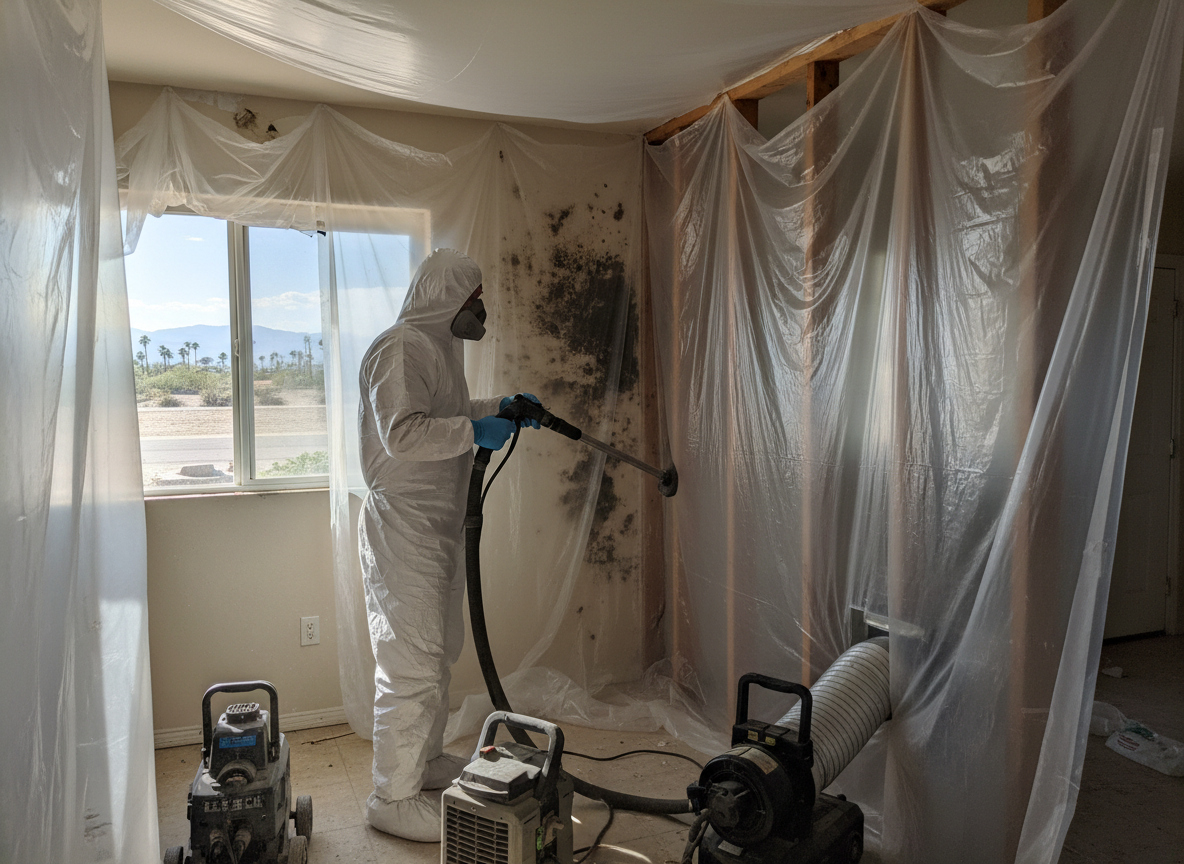
North Palm Springs sits in Riverside County where extreme summer heat pushes constant air conditioning use, creating condensation inside ducts and around units that homeowners rarely inspect. Older ranch homes and mid-century builds common along N Indian Avenue often have flat roofs and minimal attic ventilation that trap humidity from irrigation overspray or rare winter rains. These conditions let mold establish behind walls or in crawl spaces before any visible signs appear, requiring targeted removal rather than surface cleaning.
Plumbing leaks in slab foundations, a frequent issue in the area’s older stock, allow moisture to wick upward into drywall and baseboards. Desert Hot Springs and Palm Springs neighbors share the same soil and water table challenges that slow natural drying even after a leak is fixed. Remediation here means isolating the source, removing saturated materials, and confirming dryness with meters before any rebuild because residual moisture quickly restarts growth during the next heat wave.
Containment protocols must account for the dry, dusty air that can carry spores into unaffected rooms if barriers are not sealed properly. Technicians working from the 19997 N Indian Ave base respond day or night because a small bathroom leak discovered on a 110-degree day can spread through the entire HVAC system by morning. Final clearance testing verifies that hidden pockets common in these homes have been addressed rather than masked.
Homeowners sometimes attempt bleach wipes on visible spots only to find the problem returns weeks later when monsoon moisture or sprinkler overspray reintroduces water. Proper remediation includes documenting affected square footage, disposing of porous materials, and advising on ventilation upgrades suited to the local climate so the same conditions do not recur.
Technician insight
In North Palm Springs the thing that catches most people out with mold remediation company is how nonstop summer AC use hides slow condensate leaks until spores reach the return plenum, and the mild winters never fully dry the crawl spaces of 1960s ranch homes along N Indian Ave.
Attic Mold from AC Condensate in North Palm Springs
A homeowner noticed a musty smell near the hallway vent during a heat wave. Inspection revealed a clogged condensate line dripping into attic insulation above the master bedroom. The team contained the attic, removed saturated insulation, treated framing, and ran drying equipment for 48 hours before clearance testing confirmed safe levels.
How it works
- 1
Site Inspection and Moisture Mapping
Technicians examine all suspect areas using meters and borescopes to locate hidden moisture behind walls and in attics common to North Palm Springs homes.
- 2
Containment Setup
Negative air machines and sealed barriers prevent spore migration through the dry desert air into living spaces or HVAC systems.
- 3
Removal and Cleaning
Affected porous materials are removed, surfaces are treated, and remaining structure is HEPA vacuumed and antimicrobial cleaned.
- 4
Drying and Verification
Industrial dehumidifiers and air movers dry the space, followed by post-remediation testing to confirm safe moisture levels before any reconstruction.
Pricing
Upfront quotes provided after on-site inspection; final cost depends on extent of hidden damage and square footage affected.