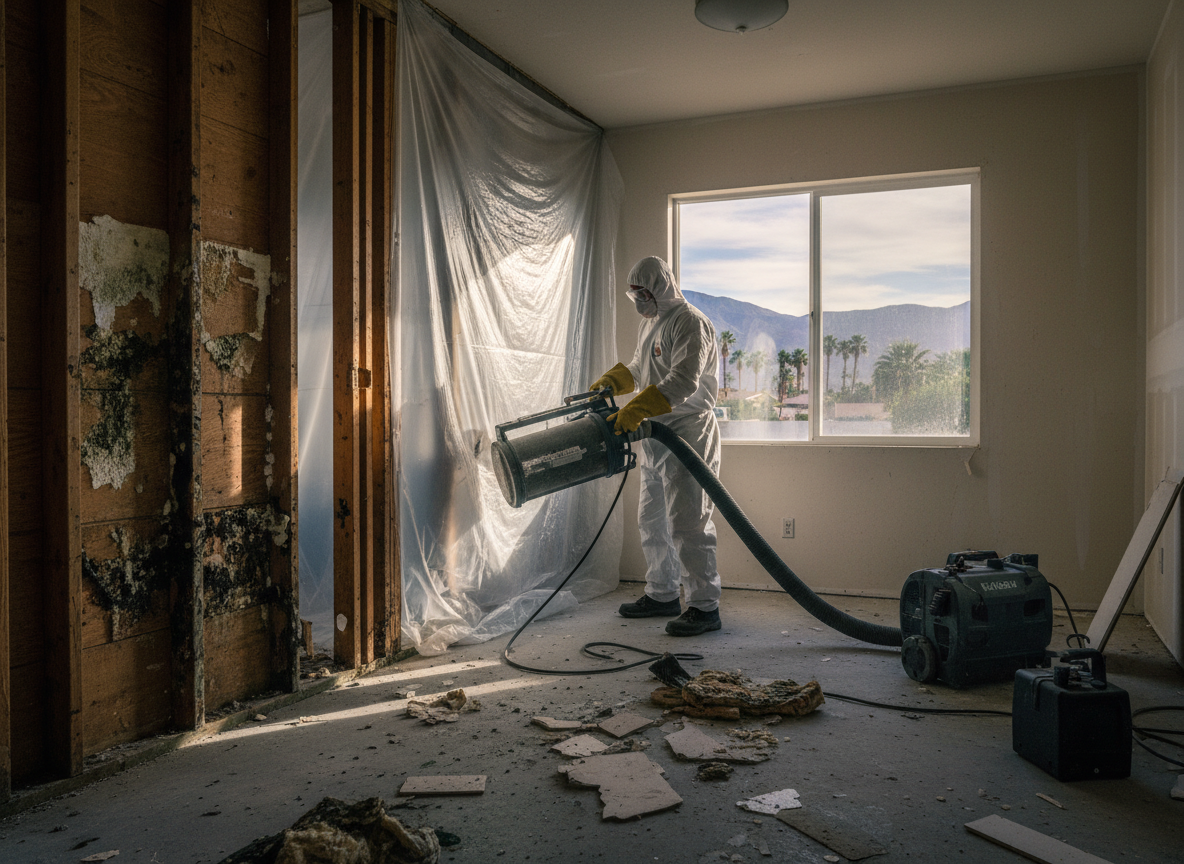
North Palm Springs sits in the hot desert climate of Riverside County where very hot summers drive heavy air conditioning use and mild winters allow evaporative coolers to run. These systems often create hidden condensation inside walls and attics of homes built along N Indian Ave and nearby streets. When moisture meets dust and limited airflow, mold colonies form behind drywall or in crawl spaces that standard cleaning misses. Remediation requires isolating the affected zones, removing porous materials, and drying the structure before any rebuild.
Homes in North Palm Springs and adjacent Desert Hot Springs frequently use older wood-frame construction with single-pane windows that trap humidity. After rare but intense rain events, water can pool against slab foundations or enter through roof penetrations common in the area. Technicians must map moisture with meters rather than relying on visible signs, because mold travels through HVAC ducts that serve multiple rooms. Containment barriers and negative air machines prevent spores from spreading into unaffected living spaces during removal.
Proper remediation here means disposing of contaminated insulation and drywall off-site while treating remaining surfaces with EPA-registered antimicrobials. Rebuilding follows only after relative humidity readings stay below 50 percent for several days. Residents along routes connecting to Palm Springs often overlook bathroom exhaust fans that vent into attics, creating repeated moisture cycles. Addressing these points during each job reduces the chance of recurrence in the same property.
Seasonal Moisture Patterns
Hot summer AC loads and occasional winter rains both push moisture into building cavities in North Palm Springs. Checking evaporative cooler pads and duct insulation before peak seasons prevents many callbacks.
Technician insight
In North Palm Springs the thing that catches most people out with mold remediation near me is how evaporative coolers in homes along N Indian Ave keep feeding moisture into wall cavities even during mild winters. Homeowners run the units for comfort and never check the pads or duct insulation, so the same patch of mold returns within months. We always trace back to the cooler first before any wall work starts.
Hidden Growth Behind AC Closet
A North Palm Springs resident noticed musty odors near the hallway AC closet after a mild winter. Inspection found condensation from the evaporative cooler had soaked the drywall and insulation on two walls. We isolated the closet, removed the wet materials, treated the framing, and ran drying equipment until readings dropped below target. The homeowner replaced the cooler pads and added a timer, stopping the cycle.
How it works
- 1
Initial Assessment
Technician arrives within hours, uses moisture meters and borescopes to locate hidden growth in North Palm Springs homes without disturbing finishes.
- 2
Containment Setup
Plastic barriers and negative air machines isolate the work zone so spores do not migrate to other rooms or the HVAC system.
- 3
Material Removal
Affected drywall, insulation, and trim are cut out and bagged for proper disposal while non-porous surfaces receive antimicrobial treatment.
- 4
Drying and Clearance
Industrial dehumidifiers and air movers run until readings confirm safe levels, followed by post-remediation verification sampling.
Pricing
Upfront quotes based on affected square footage, depth of hidden growth, and materials involved; no two North Palm Springs jobs price the same.