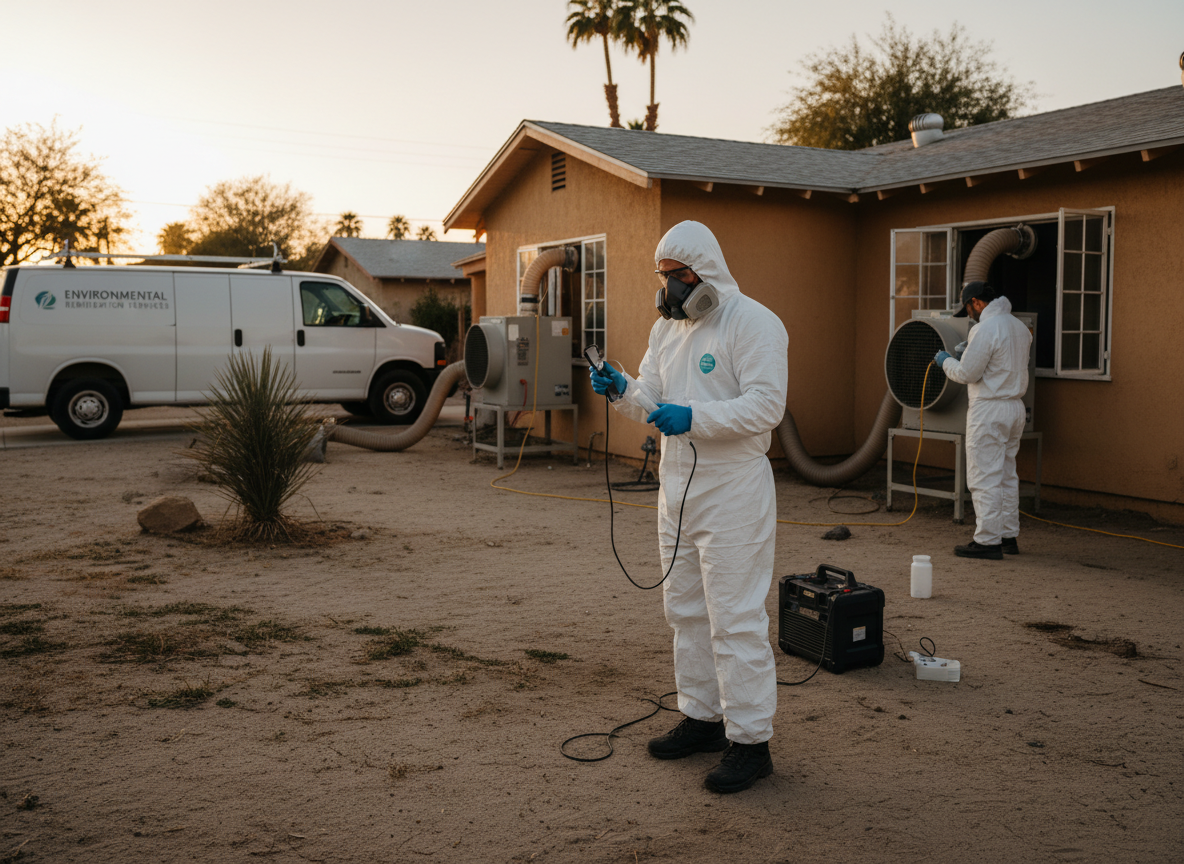
Post remediation mold testing requires separate sampling protocols from initial inspections because residual spores can linger in HVAC systems or behind drywall in North Palm Springs tract homes built from the 1960s onward. Technicians collect both air samples and surface swabs from multiple rooms, comparing results against outdoor baseline readings taken the same day. In Riverside County’s hot desert climate, rapid temperature swings between day and night can cause hidden moisture pockets in stucco walls, so testing focuses on attics and crawl spaces where condensation forms during mild winter nights.
Edge cases common here include false negatives from heavy desert dust coating sample media and cross-contamination when nearby Desert Hot Springs properties share irrigation lines. Clearance criteria follow industry standards requiring spore counts inside to fall below outdoor levels with no indicator species present. Homeowners receive a written report detailing each sample location, laboratory findings, and any areas needing additional remediation before re-occupancy.
Testing Protocol Notes
Samples are gathered at least 48 hours after remediation finishes and after the property has been returned to normal temperature and humidity. This timing prevents inflated readings from disturbed dust still settling in Palm Springs-adjacent neighborhoods.
Technician insight
In North Palm Springs, the thing that catches most people out with post remediation mold testing is assuming a single indoor sample is enough. Our desert climate creates temperature differentials that trap moisture behind stucco in older homes near Indian Avenue, so we always pull multiple samples from attics and wall cavities even when the main living areas test clear.
Hidden Moisture Behind Bathroom Wall
A North Palm Springs homeowner called after remediation of a shower leak. We found elevated aspergillus levels in one bedroom despite clean visual results. Additional sampling traced the source to a shared wall with an exterior irrigation line that had been missed. Targeted drying and re-testing produced clearance levels matching outdoor baselines.
How it works
- 1
Initial Consultation
Review prior remediation scope and schedule testing once the property is dry and cleaned.
- 2
On-Site Sampling
Collect air and surface samples from targeted rooms plus outdoor controls using calibrated equipment.
- 3
Laboratory Analysis
Submit samples to an accredited lab for spore identification and count comparison.
- 4
Report Delivery
Provide written clearance results with specific recommendations if further work is required.
Pricing
Cost depends on square footage, number of samples required, and accessibility of testing locations.