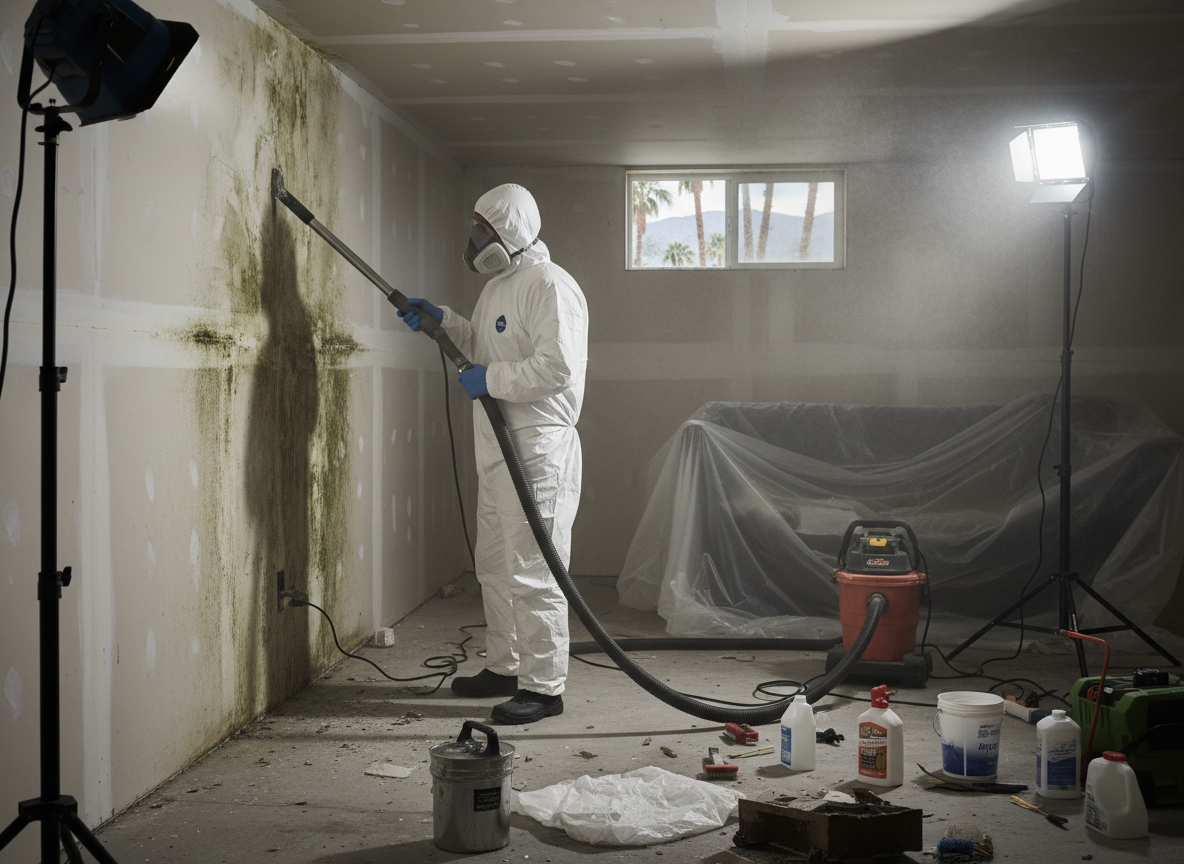
North Palm Springs sits in a hot desert climate where summer temperatures regularly push past 110 degrees, forcing constant air conditioner use. Condensation lines and coils inside older single-story homes and mid-century builds along Indian Avenue often develop hidden growth that spreads into wall cavities and under flooring. Professional mold removal here starts with moisture mapping and containment before any demolition, because disturbing dry, dusty material without proper barriers sends spores through the HVAC system that serves the entire house.
Riverside County building practices in the 1960s and 1970s left many North Palm Springs properties with minimal vapor barriers and slab-on-grade construction that traps irrigation water from nearby Desert Hot Springs runoff. When monsoon storms hit, water migrates under stucco and into base plates. Removal crews must cut back drywall at least 18 inches past visible staining and treat subflooring with antimicrobial rinses rated for desert temperature swings, or regrowth appears within weeks once the first cool night drops indoor humidity.
Technicians working from the shop at 19997 N Indian Ave carry negative-air machines sized for the small lot sizes common in the neighborhood. They seal off bedrooms and bathrooms separately because open floor plans allow spores to travel the full length of the house. After removal, dehumidifiers run for several days to bring moisture content below 12 percent before any new materials go in, matching the dry desert air that homeowners expect once the system is restored.
Technician insight
In North Palm Springs, the thing that catches most people out with professional mold removal is how fast AC condensation lines drip onto slab edges during 110-degree summers. Homeowners keep the thermostat low all season without checking the drain, so growth starts under baseboards weeks before any musty smell appears. By the time we get the call the mold has already traveled along the footing into the next room because the dry desert air hides the moisture until we open the wall.
Hidden Growth Behind AC Closet in North Palm Springs
A homeowner near Indian Avenue noticed a faint odor only after the first monsoon rain. Inspection showed the air handler condensate line had been dripping onto the slab edge for months. We removed the lower three feet of drywall in the closet and adjacent bedroom, treated the footing, and ran drying equipment for four days. Once moisture readings dropped below 12 percent the space passed clearance and the homeowner could reinstall baseboards without further issues.
How it works
- 1
Inspection and Moisture Mapping
Technicians arrive with thermal cameras and moisture meters to locate hidden growth behind walls and under slabs common in North Palm Springs homes.
- 2
Containment Setup
Plastic barriers and negative air machines isolate affected rooms so spores do not travel through the HVAC that runs constantly in summer heat.
- 3
Removal and Cleaning
Affected materials are cut out, surfaces treated, and debris sealed for disposal while keeping dust down in the dry desert air.
- 4
Drying and Verification
Dehumidifiers and air movers bring moisture levels below 12 percent before clearance testing confirms the space is ready for rebuild.
Pricing
Upfront quotes after on-site inspection; final price depends on extent of hidden growth and access in older North Palm Springs homes.