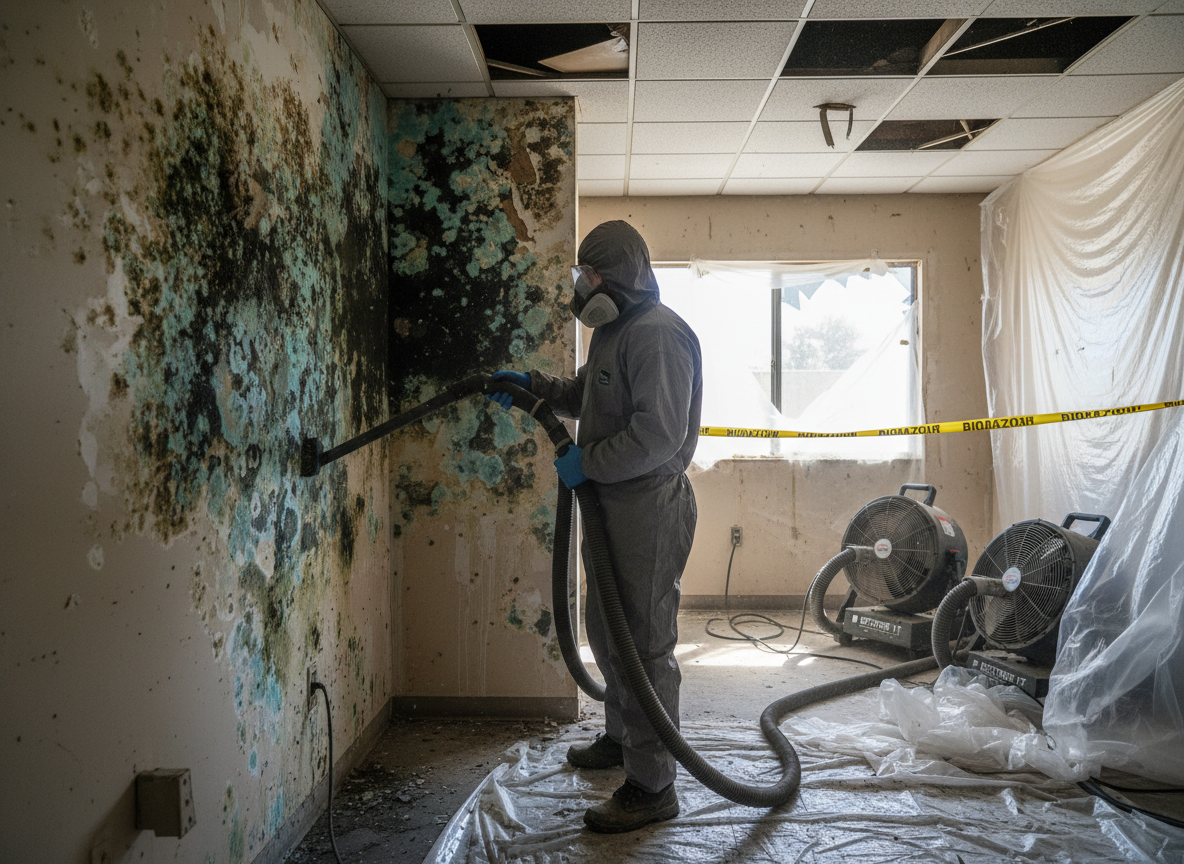
Toxic mold removal in North Palm Springs requires careful containment because the area's hot desert summers push air conditioners to run nonstop, creating condensation inside walls and ducts. Homes near N Indian Avenue often have older stucco construction where leaks from swamp coolers or roof penetrations allow black mold to spread behind drywall without visible signs on the surface. Technicians must isolate affected zones with negative air machines to prevent spores from drifting into the dry desert air outside.
Riverside County building practices from the 1970s and 1980s left many North Palm Springs houses with limited ventilation in crawl spaces and attics. When monsoon moisture or irrigation overspray enters these voids, toxic varieties like Stachybotrys can take hold on paper-faced drywall and insulation. Removal crews cut out contaminated sections at least 18 inches beyond visible growth, then treat framing with antimicrobial solutions before drying the cavity with commercial dehumidifiers sized for 110-degree daytime temperatures.
Clearance testing after toxic mold removal is essential here because the mild winters allow spores to remain dormant until the next cooling season restarts the cycle. Air sampling inside sealed containment areas confirms spore counts match outdoor baselines from Palm Springs and Desert Hot Springs before barriers come down. Homeowners along the north end of Indian Avenue frequently discover the issue only after musty odors appear when the AC first kicks on in spring.
Technician insight
In North Palm Springs, the thing that catches most people out with toxic mold removal is how the constant AC use during 110-degree summers pushes condensation into wall cavities of the older homes along Indian Avenue, letting growth spread far beyond any visible stain before anyone notices the musty smell.
AC Condensation Mold in North Palm Springs Home
A homeowner near 19997 N Indian Ave noticed a persistent odor when the cooling system started in May. Inspection revealed black mold behind drywall in a bedroom where the AC condensate line had been leaking into the wall for two seasons. Crews contained the room, removed the affected sections, treated the framing, and dried the cavity before clearance testing passed.
How it works
- 1
Initial Assessment
Inspect the property for visible growth and hidden moisture using thermal imaging and moisture meters, focusing on AC units and older stucco walls common in North Palm Springs.
- 2
Containment Setup
Seal the work area with plastic sheeting and negative air pressure to keep spores from spreading into the dry desert environment.
- 3
Removal and Cleaning
Cut away contaminated materials, treat surfaces, and clean HVAC components where condensation from constant summer use has promoted growth.
- 4
Drying and Verification
Dry the space thoroughly and perform air sampling to confirm the area meets clearance standards before reconstruction.
Pricing
Cost depends on square footage affected, depth of hidden growth behind walls, and whether HVAC components require cleaning.