2026-10-17 ·
Ventilation Fixes That Reduce Mold Risk in Desert Homes
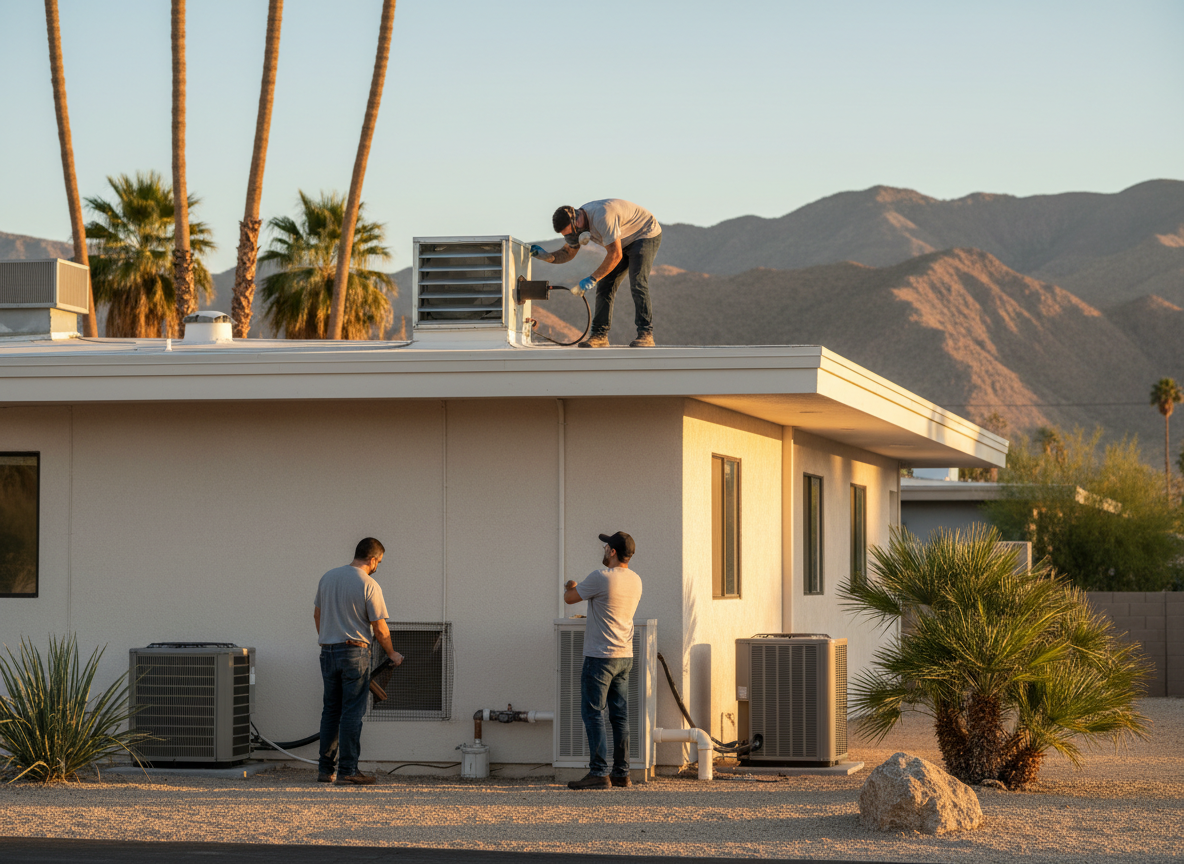
In North Palm Springs homes, adding balanced attic intake and exhaust vents plus upgrading bathroom exhaust fans to 80–100 CFM units with humidity sensors typically keeps indoor relative humidity below 50 percent during the long cooling season and cuts visible mold recurrence on ceilings and in ducts. These changes address the hot desert climate where daily temperature swings and constant AC use create hidden moisture pockets even though rainfall stays low most of the year.
Attic Ventilation Upgrades
North Palm Springs tract homes built from the 1960s onward often have inadequate ridge and soffit vents that trap heat and allow AC condensation to form on roof sheathing. Adding continuous ridge vents paired with new eave vents sized at one square foot per 150 square feet of attic floor improves airflow enough to drop attic temperatures by 20–30 degrees on summer afternoons. This prevents the warm, moist air from the living space from condensing against cooler roof decking during mild winter nights. Homeowners in neighborhoods near Indian Avenue and Dillon Road see the biggest gains because those blocks sit on flatter terrain with less natural wind. Proper attic ventilation also reduces the load on HVAC systems that otherwise run longer cycles and push more humid air through the house. When combined with sealing recessed can lights, these vents keep moisture from migrating upward where it feeds mold on insulation batts.
Bathroom and Kitchen Exhaust Improvements
Many single-story homes between North Palm Springs and Desert Hot Springs still rely on 50 CFM fans that vent into attics rather than through the roof. Replacing them with 80–100 CFM units that run on a timer or humidity sensor and terminate through the roof prevents steam from lingering after showers. In Riverside County’s dry air, the real issue is short run times that leave walls and ceilings damp long enough for spores to colonize. Installing a 6-inch duct with smooth interior walls and a backdraft damper cuts moisture retention inside the duct itself. Kitchens benefit from similar upgrades on range hoods, especially when residents cook with steam-heavy methods common in local households. These exhaust improvements work best when paired with a fresh-air intake or ERV so the home does not pull unfiltered desert air through cracks.
AC Duct and Return-Air Adjustments
Central air systems in Palm Springs and North Palm Springs homes frequently develop mold inside flex ducts and on evaporator coils because return-air pathways pull air from bathrooms and laundry rooms. Sealing and insulating ducts in attics with R-8 wrap stops condensation on cold metal surfaces during 110-degree summer days. Adding a dedicated fresh-air intake duct to the return plenum dilutes indoor humidity without relying solely on open windows that let in blowing sand. Regular filter changes every 30–45 days during peak cooling months further limits dust that holds moisture. Homeowners who notice musty smells when the system first starts should inspect the return grille location and consider relocating it away from high-moisture rooms.
Ongoing Monitoring in Local Conditions
Even after ventilation work, North Palm Springs residents should check humidity levels monthly with a digital meter placed in the central hallway. Readings that stay above 55 percent during the mild winter months signal that additional dehumidification or further sealing is needed. Linking these checks to the same-day mold testing services offered locally helps catch issues before they require full mold remediation near me. Properties near Whitewater and Desert Hot Springs also face occasional flash-flood moisture in crawl spaces, making periodic inspection of underfloor vents worthwhile. For readers dealing with duct-related growth, the guide on signs of mold in North Palm Springs air conditioning ducts outlines visual checks that pair well with these ventilation steps. Cost factors for the full set of fixes typically range from $1,800 to $4,200 depending on home size and existing duct condition, according to local project data in the Coachella Valley.